
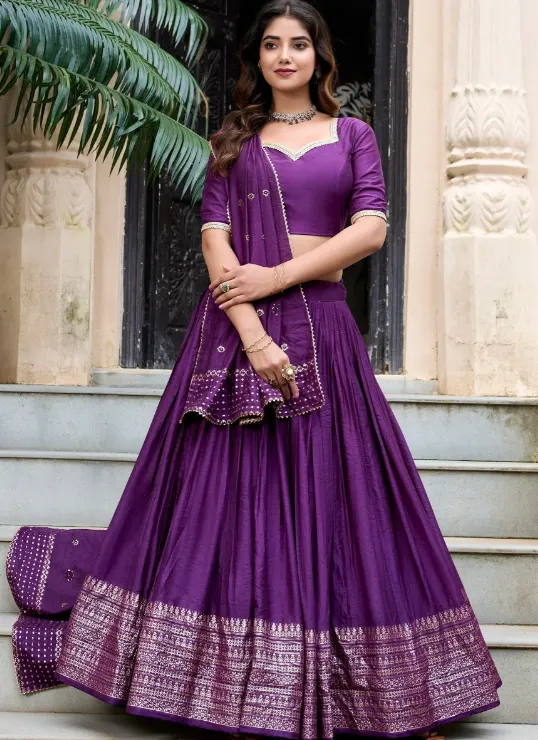
The workday ends at six, and your friends are meeting for Garba an hour later. There is barely time to travel home, let alone arrange an elaborate outfit. A Simple lehenga choli can make the change easier when you choose pieces that pack neatly and feel good after a long day. The idea is not to dress like you are still at work. It is to arrive ready for the music without spending the first half of the evening fixing your clothes.
Start With the Changing Space
Decide where you will change before you decide what to carry. An office changing room gives you room to arrange the skirt, while a crowded washroom may make a wide dupatta difficult to unfold. Keep the outfit in a garment bag instead of compressing it beneath your lunch box. If a friend is coming from the same workplace, coordinate your departure rather than hurrying separately. A few minutes with a full-length mirror can save repeated adjustments after you reach the venue.
Let the Skirt Stay Simple
A plain skirt offers a useful base when time is limited. One black cotton festive design combines a flared skirt with a mirror-work blouse and a leheriya-style dupatta. Most of its visual detail comes from the pieces above the waist, not a heavily patterned skirt. That leaves the outfit festive without making every layer compete for attention. Check the waistband, lining and actual hem length before choosing a similar set. A skirt that is easy to step into matters more than a dramatic photograph.
Give the Blouse Festive Detail
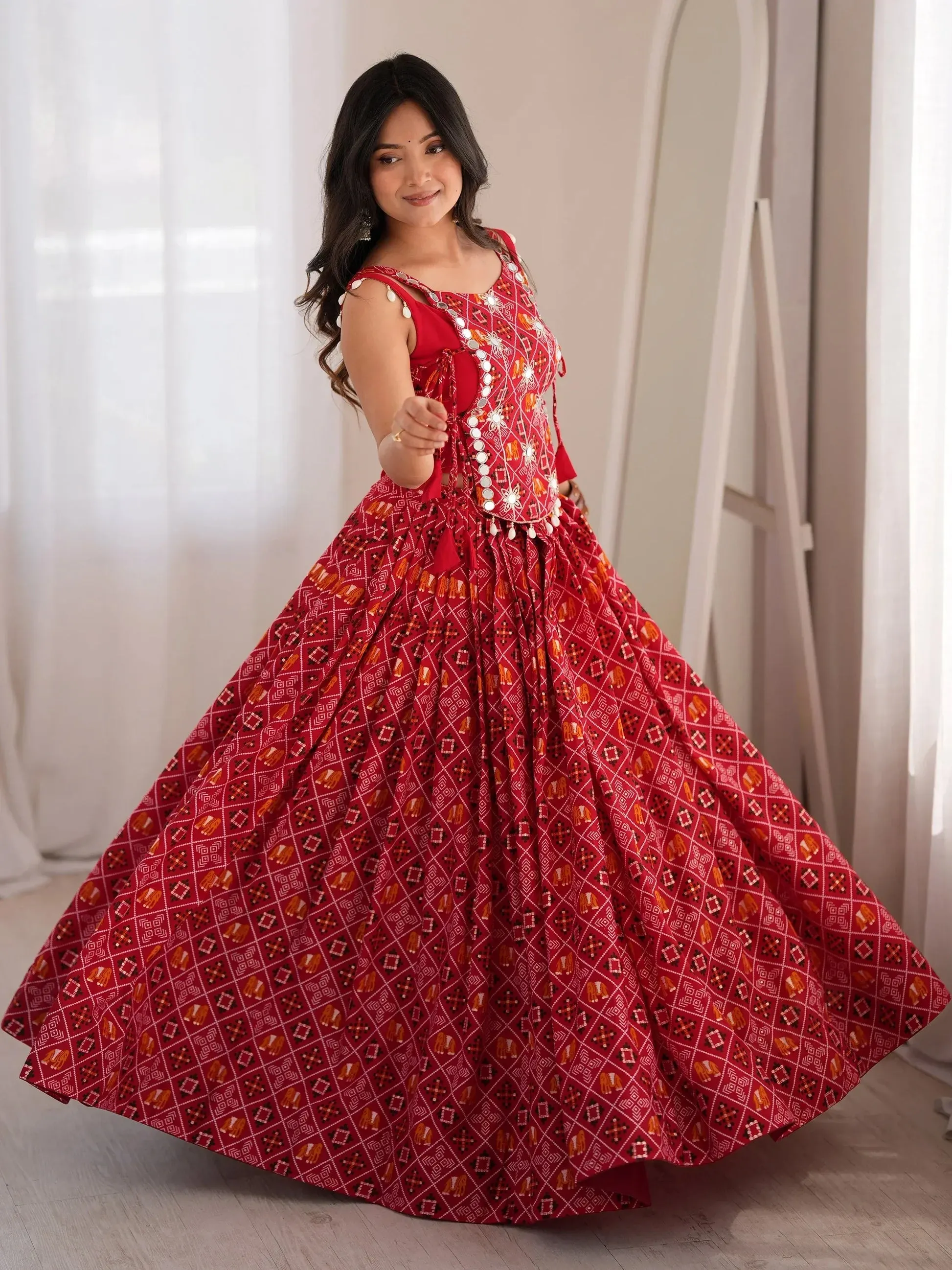
A navratri lehenga choli can take the opposite approach, pairing a quieter skirt colour with a lively blouse. One off-white georgette design has a wide twelve-metre flare and a stitched rayon blouse decorated with Bandhani print and mirror work. Its generous skirt would need more changing space, even though the blouse is ready to wear. Compare those features with your travel plan. If you are going directly from the office, an easier skirt and one striking blouse detail may suit you better.
Choose Accessories That Travel Well
Leave the delicate necklace with several tiny hooks at home if it always takes another person to fasten. Earrings you can put on yourself, a hair tie and a compact bag are often enough to change the mood of the outfit. Try the jewellery while wearing your actual blouse: a mirror-work cuff might catch a bracelet you usually love. Keep the accessories in a padded pouch, separate from the embroidered fabric. You can finish getting ready without spreading small pieces across a public counter.
Pack a Small Change Kit
Packing for one evening is easier when every item has a purpose. Put the blouse, skirt and dupatta together, with shoes in their own bag so the soles never rest against the fabric. A soft pouch protects earrings and keeps spare fastenings from catching on embroidery. If you will remove your office clothes, leave enough space in the bag to bring them home. Check the kit once before leaving, then keep the list short enough to remember without consulting your phone.
-
Foldable footwear bag
-
Small jewellery pouch
-
Spare safety pins
-
Hair tie and comb
-
Reusable clothes bag
Make the Journey Home Easy
Think about the journey after the last song as carefully as the trip to the venue. If you will take public transport, choose a skirt you can gather while climbing steps and shoes you have already worn comfortably. Avoid carrying a long loose dupatta where it might trail near a moving escalator. Arrange your return with friends if that makes the journey simpler, and keep your phone accessible. The outfit should still be manageable when you are tired, and the music has stopped.
Conclusion
When the office day is behind you, the celebration deserves your attention rather than another round of outfit adjustments. Give yourself one quiet moment before entering: straighten the dupatta, check the waistband and put away the garment bag. Then find the friends who saved you a place in the circle. You do not need the most elaborate skirt in the room to enjoy the first beat. Choose pieces that let you join in, and let the evening become the reason you remember them.