
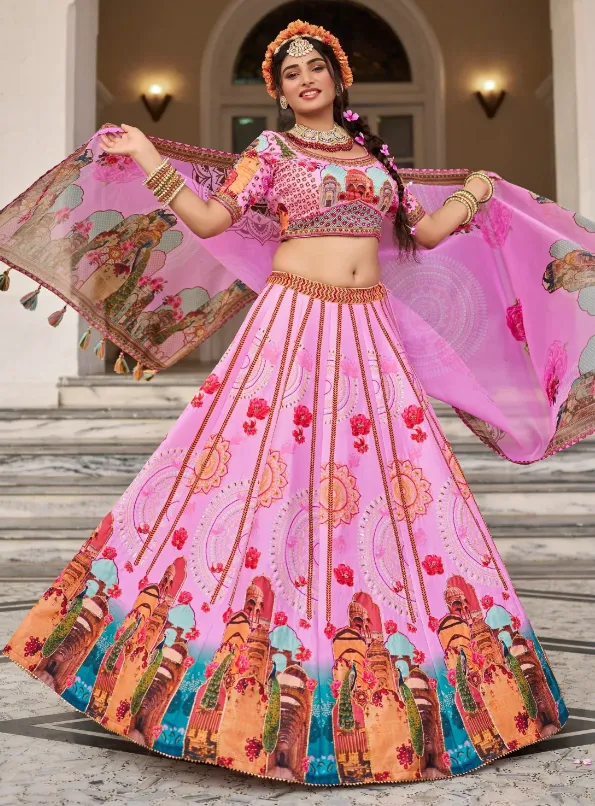
Pink has become one of the most adaptable colours in Indian occasion wear. A pink lehenga can feel romantic, playful, elegant, or dramatic depending on the shade, fabric, and embroidery. That range makes it suitable for engagements, mehendi functions, sangeet nights, receptions, bridesmaid looks, and festive family gatherings. Instead of treating pink as one fixed colour, it helps to think of it as a complete palette with many different moods.
The strongest outfit choices usually begin with the event rather than the trend. Daytime functions can support softer tones and lighter details, while evening celebrations give deeper pinks and stronger embellishment more room to stand out. Choosing the right shade first makes the rest of the styling much easier.
Find the Pink That Matches the Occasion
Baby pink, blush, dusty rose, rani pink, magenta, coral, and fuchsia can all create completely different effects. Pale shades often feel fresh in natural light, making them well suited to daytime ceremonies and garden venues. Deeper pinks tend to hold their presence under evening lighting and can feel more festive for receptions or sangeet events.
Soft Versus Bold
Soft pink works well when the overall look is meant to feel delicate. It can be paired with pearl, silver, pastel embroidery, or floral details. A stronger pink lehenga choli, on the other hand, can carry gold work, mirror details, zari, or contrasting borders without losing its colour impact.
Use Contrast to Keep Pink Interesting
Wearing pink from head to toe can look polished, but contrast often gives the outfit more personality. Green, ivory, gold, orange, wine, and even blue can be introduced through the blouse, dupatta, jewellery, or border.
Useful combinations include:
-
Blush pink with silver or pearl details
-
Rani pink with antique gold jewellery
-
Coral pink with ivory or champagne accents
-
Magenta with green for a festive contrast
-
Dusty rose with deeper wine details
The idea is not to add as many colours as possible. One supporting shade is usually enough to create depth.
Let the Fabric Change the Mood
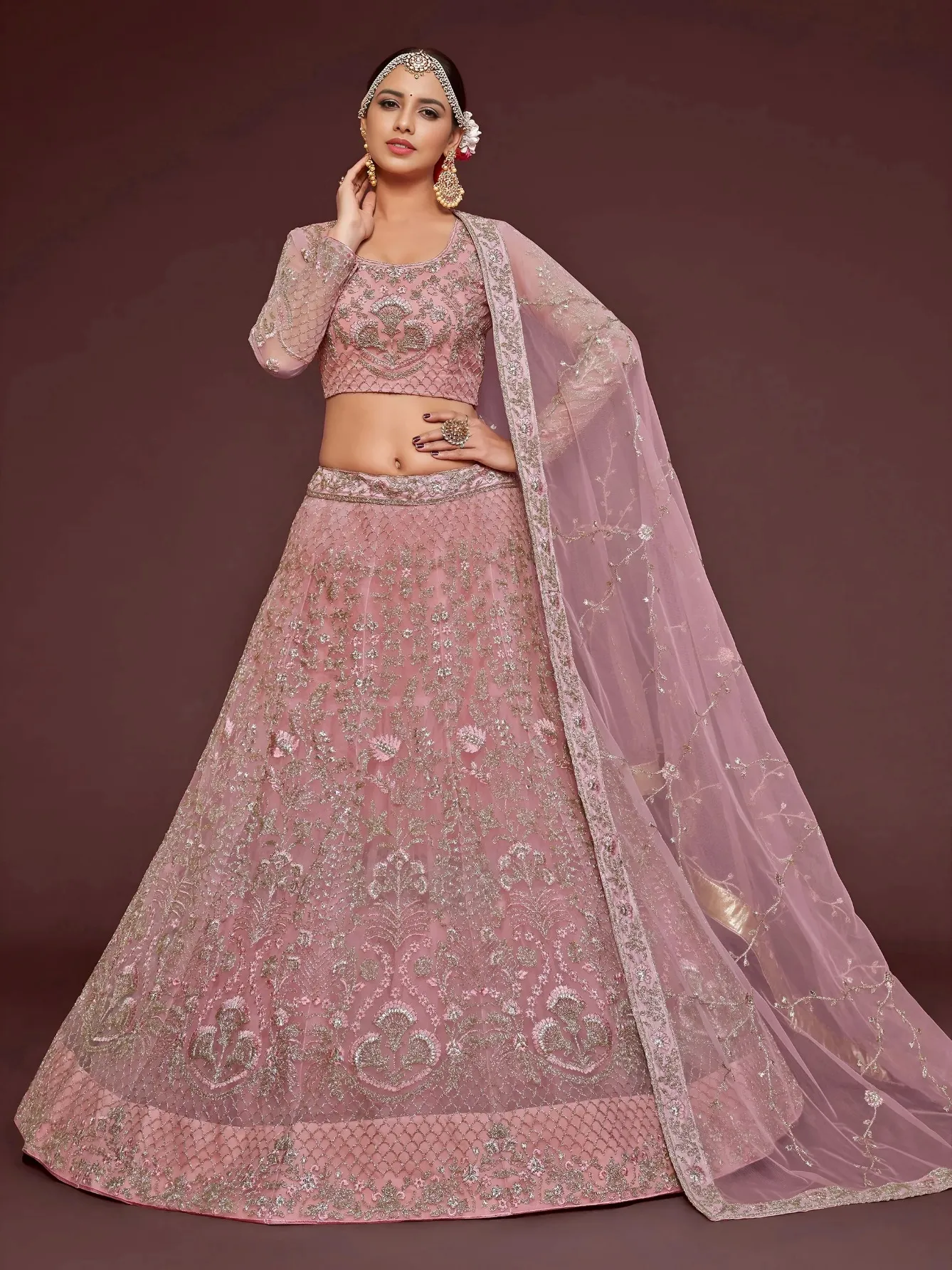
The same pink can look very different on different materials. Organza can make a pastel shade feel airy and crisp, while georgette creates a softer, flowing silhouette. Net can add layered volume, and silk-based fabrics can give stronger pinks a richer, more formal appearance.
Think About Surface Detail
Embroidery should work with the fabric rather than cover it completely. Floral threadwork can enhance organza, sequins can add light to georgette, and zari can give silk a more ceremonial finish. When the base colour is already bold, controlled embellishment often looks more refined than dense decoration everywhere.
Give the Blouse Its Own Role
The blouse does not always need to match the skirt exactly. A contrast blouse can turn a familiar pink lehenga into a more individual outfit. A gold or ivory blouse can soften a bright skirt, while a deeper pink blouse can give a pastel skirt more definition.
Sleeve and neckline choices can also change the mood. Elbow-length sleeves feel classic, while sleeveless or structured designs can make the outfit more contemporary. The best option is one that supports the event and remains comfortable throughout it.
Style Pink Without Making It Too Sweet
Because pink is often associated with softness, the final styling can easily become overly delicate if every element follows the same theme. Mixing in stronger shapes or metallic details can create better balance.
For example, pair a pastel lehenga with a structured choker, or wear a bold pink set with clean earrings and a sleek bun. The contrast between colour and styling can make the outfit feel more mature and intentional.
Match the Shade to the Setting
Venue lighting can affect pink more than expected. Soft blush may appear almost ivory in bright sunlight, while very deep magenta can become darker indoors. Consider where most photographs will be taken and whether the event is during the day or evening.
A Simple Event Guide
For a daytime mehendi, softer pinks with floral details can work beautifully. For a sangeet, brighter shades and reflective work can add energy. Receptions can support deeper rose, magenta, or fuchsia with richer embroidery and more formal jewellery.
Conclusion
Pink lehengas offer far more variety than one colour name suggests. From subtle blush and dusty rose to vivid rani pink and magenta, each shade can create a different mood for a different celebration. The best results come from matching the tone to the event, choosing fabric and embroidery that support it, and using contrast with purpose. With a balanced blouse, thoughtful accessories, and attention to lighting, pink can feel graceful, bold, modern, or traditional without becoming repetitive or predictable.